
Meet Lucía Vergara
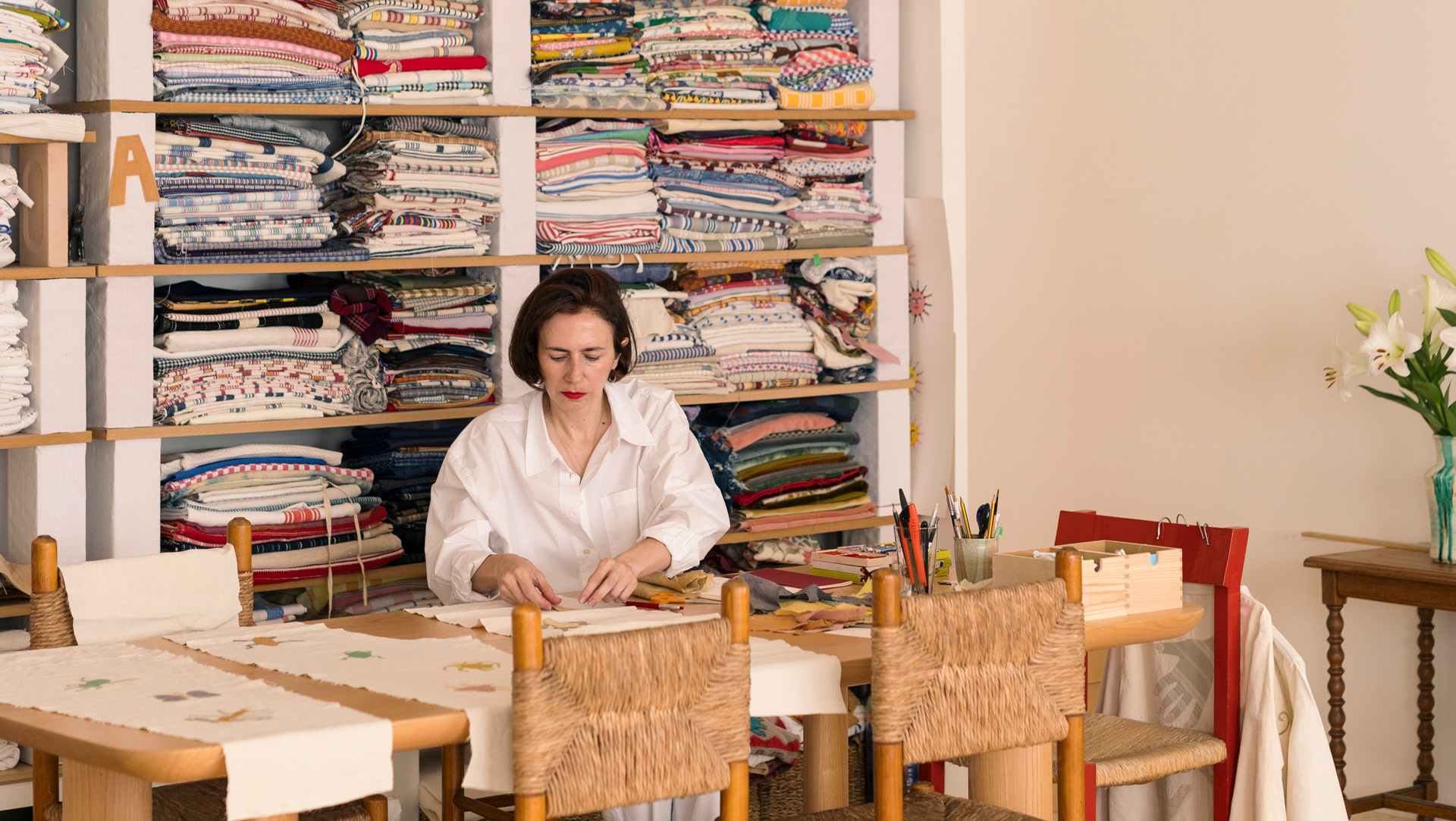
On the occasion of her debut exhibition this December at Alzueta Gallery, we speak with Lucía Vergara Ballester, a Barcelona-based artist and creative director at Après Ski. Her work is deeply rooted in tradition, intuition, and the art of manual craft. Rather than chasing constant innovation, Lucía embraces the urgent need to reconnect with our cultural roots and the past. In this interview, we get to know more about her practice, symbolic universe, and the meaning behind her pieces.
Alzueta Gallery: Your symbolic universe seems to be shaped by fairy tales, dreams, craftsmanship, mythology, and even language (as seen in your Abecedario series). Which of these influences has had the greatest impact on your work?
Lucía Vergara: Almost all of those influences shape my work, except fairy tales, which I’d say are more like stories about witches. One of my main practices is writing down my dreams as soon as I wake up, something I’ve been doing since 2013. I’ve accumulated more than 400 pages. My interest in craftsmanship is something I inherited from my family, and it’s been part of my daily life since childhood. I love working with my hands while listening to podcasts about symbolism, philosophy, and mythology.
My fascination with language also began early. As a child, I used to spend hours reading the dictionary. I’d look up a word and then just keep reading the ones that followed. It was like trying to find answers without knowing the questions. The Abecedario series actually comes from this same interest. It’s inspired by the traditional way of learning sewing through embroidered alphabet samplers. Girls used to practice their ABCs while learning to sew, read, and write at the same time. That’s also how I learned to sew. I wanted to reclaim that practice, turning it into a kind of visual diary where each letter becomes a garment or an object.
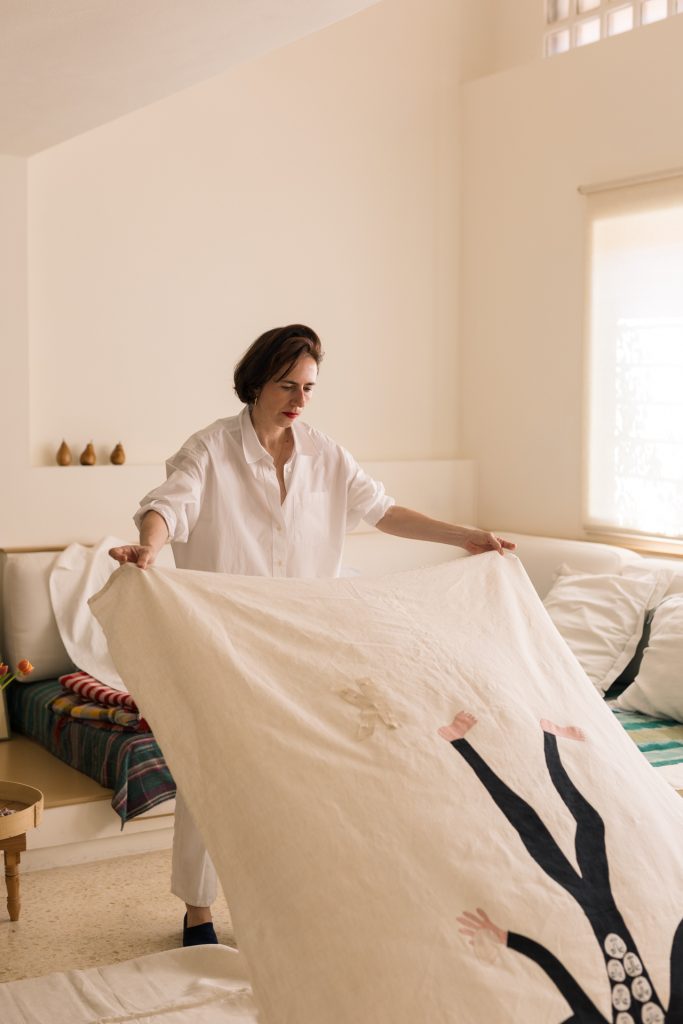
AG: Normally, your figures appear suspended against a flat, undefined background, without conventional perspective. What effect do you think this composition has on the viewer?
LV: Honestly, I hadn’t really thought about it. That’s just how the images appear to me, many of them come during meditation. They tend to emerge as if suspended in the air, and then they dissolve and disappear. They surface in an emptied mind, occupying for a few seconds a kind of imaginary space that resembles a flat backdrop. I suppose this might give the viewer a sense that these figures aren’t located in any specific place, that the background is open to their own imagination.
AG: Having developed a very personal language through your textile work, you’re now presenting both textile pieces and more traditionally framed works. How do these different formats contribute to your overall practice?
LV: Each format demands a different mindset, but I find all of them potentially interesting. I don’t want to limit myself. I’m interested in exploring different supports and formats, as well as how works relate to the space they inhabit.
AG: Let’s talk about your creative process when making a piece. Do you usually start by drawing? Do you do a lot of testing, or do you let intuition guide you? And which part do you enjoy the most?
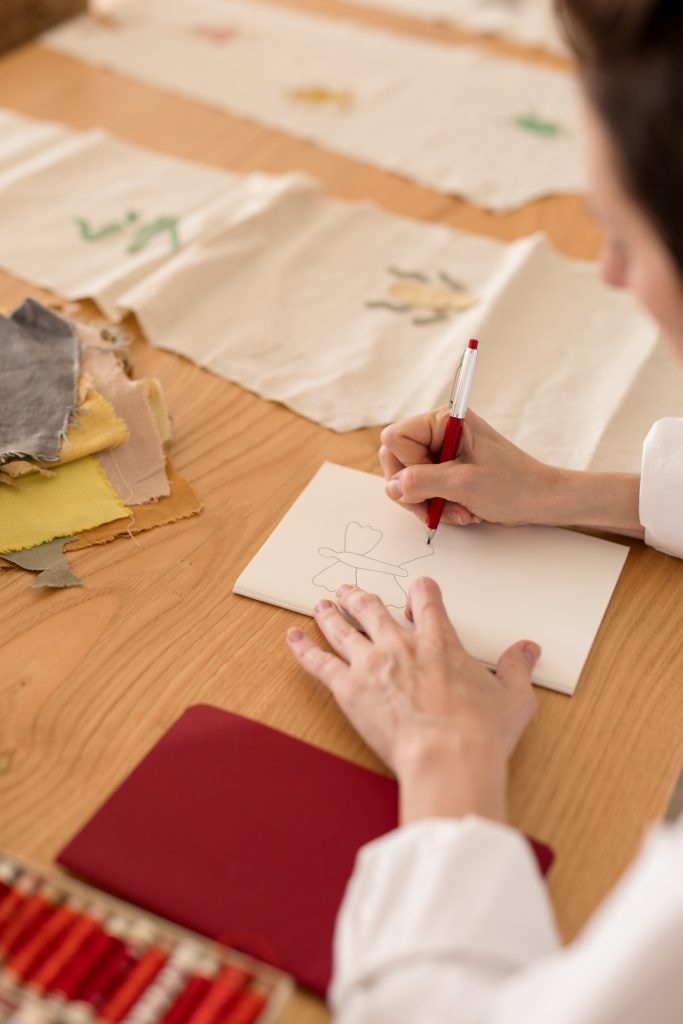
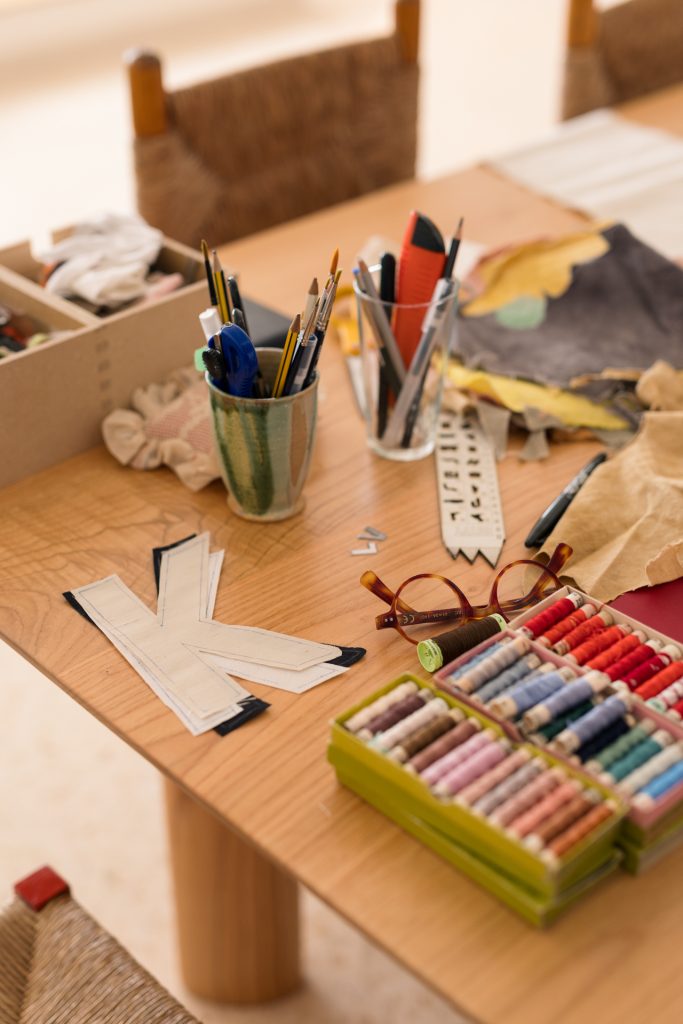
LV: It depends on the piece. For some, I work in a collage-like way: cutting, composing, and stitching as I go. In other cases, I begin with a watercolor sketch and then translate it into textile. I don’t usually do a lot of tests. If I feel stuck on an idea, I tend to abandon it and focus on what flows. I can be quite rigid in my personal life, so I try not to carry that rigidity into my artistic process. I enjoy every part of the process, but I have a particular love for color selection. I’ve always been drawn to color and its endless combinations.
AG: You’ve described your artistic practice as holistic. Does that mean, for you, the line between art and life disappears? Could you expand on what this approach means in your day-to-day practice?
LV: Yes, absolutely. For me, life and artistic practice are deeply intertwined. For example, while I was working on the “I” for Insecto in the Abecedario, I experienced several (somewhat imagined) insect infestations in my home and studio. It forced me to confront my fear of having to wash all my textiles, and I ended up working through this phobia with my therapist. That led me to deeper themes that hadn’t yet surfaced in my work.
That same week, while embroidering a scorpion on a train, I sat next to a mother and her four-year-old daughter. The girl was obsessed with hatching eggs and began acting it out. It was a surreal and magical moment that made me feel like art has the power to summon events into being. I’ve always felt that art is a powerful practice, one I enter with respect.
Discover more about Lucía Vergara’s work here.