
Meet Alexander Wertheim
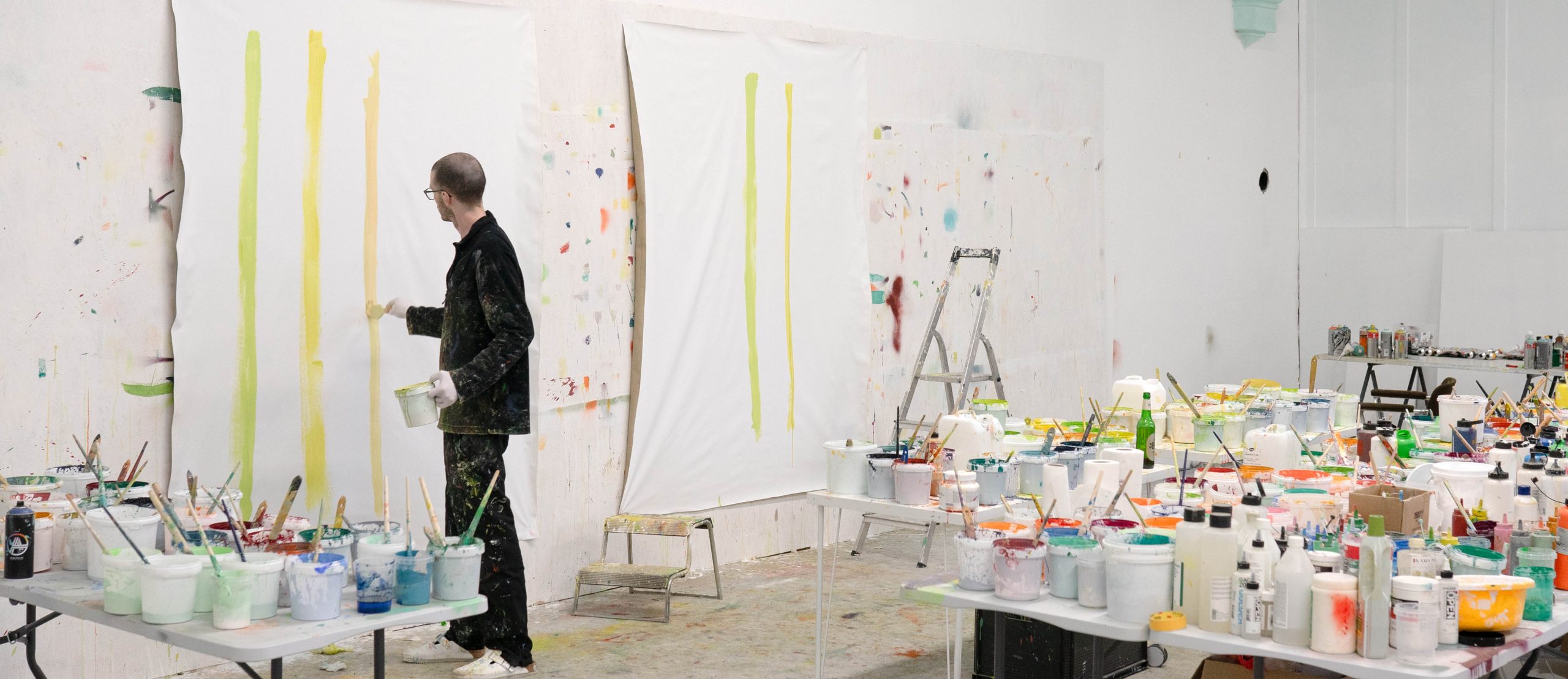
We are thrilled to announce our collaboration with Alexander Wertheim (Wertheim, Germany, 1995), a painter whose work explores the fertile ground between structure and spontaneity. Wertheim has developed a deeply intuitive practice grounded in repetition, rhythm, and the subtle negotiation of form. His paintings unfold like visual scores, grids and gestures layered in quiet tension, where color operates not as shape, but as tone. Influenced by his musical background, he treats the canvas as a site of composition: a place where parallel and perpendicular forces, intuitive marks, and methodical patterns coexist. Wertheim’s work doesn’t aim for resolution, but instead embraces the delicate balance between coherence and disintegration, inviting us to experience abstraction as a language of feeling, rhythm, and memory.
AG: Could you tell us about your journey as an artist? What led you to pursue painting as your medium?
AW: At 18, I moved to Berlin and started to study at the art academy. Painting was a good medium for me to materialize ideas fast and direct. I could make many of them in a small space for relatively little money, and every day I could start something new. About ten years, my practice was pretty much a self-cleansing process. After years of experimenting with colour field painting and gestural abstraction, I discovered my method of painting as a sort of lab accident.
AG: Your work always seems to lie on the edge between structure and its disintegration. Over the course of your career, do you think one of these forces has gained more ground than the other? Or do you feel the tension is never resolved?
AW: I’m preoccupied with how individual elements come together to form a structure – the moment when tones become a melody. For me though, a structure stays alive only as long as its parts keep striving for autonomy. I hope this tension never resolves.
AG: You have a musical background and have related your grids to chords or tonalities. In what way do you think the musical and pictorial processes are similar?
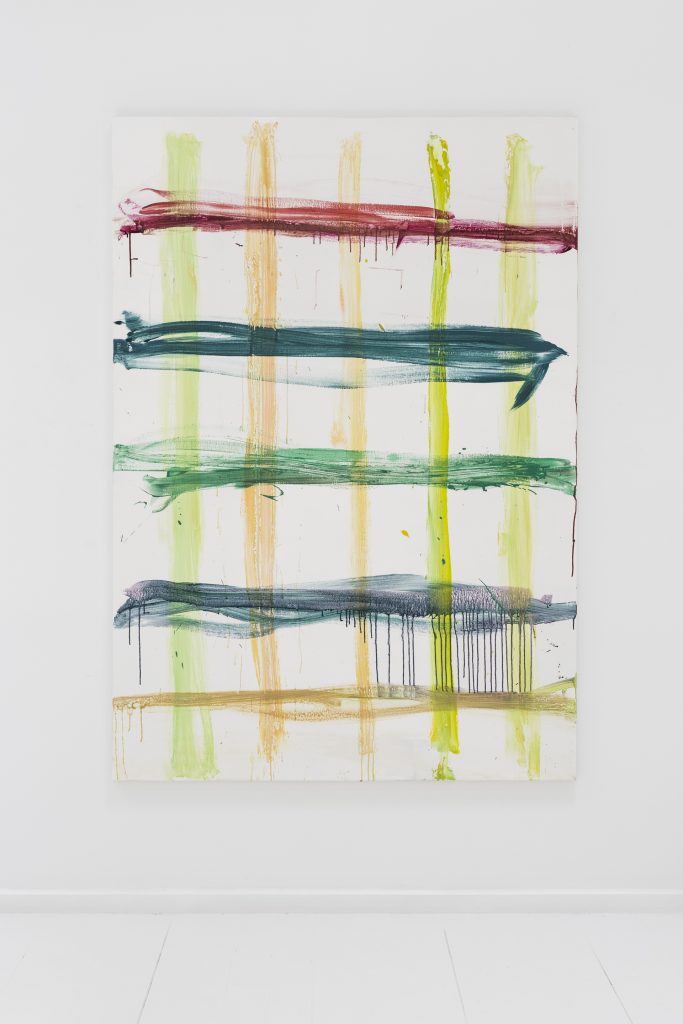
AW: In a way, my paintings consist of tone sequences that stand orthogonally to one another. The vertical elements function like a rhythmic and tonal base for the picture. The melody unfolds along the horizontal plane, laid onto the painting like a second voice. Within this interplay, connections emerge – harmonies, perhaps. This may be similar to a polyphonic piece of music.
AG: How would you define the role that white space plays in your work?
AW: I feel like white is the inherent base of painting. The art suppliers prime the canvases white, paper is white, walls are white… white is a good basis for colors.
AG: You’ve said that you want your paintings to be liked by everyone. Do you believe that abstract art, contrary to what we often think, has the potential to connect with a broader audience than figurative art?
AW: I think of abstraction as a universal language that can potentially communicate across cultural borders.
Discover more about Alexander Wertheim’s work here.